Thought of the Week
We’ve all felt that lonesome feeling of recounting a past experience we deem particularly profound, poignant, or hysterical, only to have it fall completely flat with the audience. The common retort is, “Well, I guess you had to be there.” A bit of that same kind of dynamic is circulating with regard to President Trump’s latest trade spat with Canada. While we’ve fielded some frantic calls from family, friends, and colleagues, on K Street the reaction has been somewhat “ho hum.” Most lobbyists say concerns about a massive new trade war with Canada are overblown, describing the present situation as a mere “trade skirmish.” Ok, the White House did impose new 50% tariffs on imports from Canada, which led Ottawa to issue its own retaliatory duties, but the relatively narrow scope of the tariffs has yet to spark any widespread lobbying efforts that could be labeled “frantic.” Although the risk of escalation certainly remains, the business community’s D.C. reps have largely shrugged off the latest spat after an initial wave of dread. No doubt, individual industries affected by the new tariffs are pressing for relief and urging negotiations to resume, but there exists no far-reaching lobbying efforts that have marked previous trade wars under President Trump. In fact, a few prominent lobbyists have even said that the market can bear this latest battle until Q1 2027. Don’t get me wrong, lobbyists aren’t downplaying the risks involved, they’re just not panicking…yet. A particular factor that lobbyists say has contributed to the lack of alarm is that businesses have become more flexible after facing so many of the president’s trade flaps. Given the electoral pressures at play on both ends of the negotiating table, trade analysts do not envision a resolution anytime soon, and some firms have already adjusted to the uncertain trade disruptions by stockpiling inventories and/or shifting logistics to defer planned imports from the fourth quarter of this year to the beginning of next. No doubt, a growing number of companies will face short-term pain, either from the tariffs themselves or from missing out on the reductions that might have come with a comprehensive trade deal. What’s more, certain firms and various industries are making appeals to the Trump administration, explaining that although they support fairer trade terms and greater supply chain resiliency, at present, the U.S. just doesn’t produce enough content domestically to meet demand; the result being that tariffs will crush margins. Still, K Street does not expect many carveouts from a Trump administration that has shown itself to be reluctant to issue tariff exemptions. Barring extenuating circumstances, and given the strategic nature of the Canadian duties, this time is expected to be no different. The good news: there is still an appetite within certain parts of the administration to hear about the unintended consequences of certain tariffs that sweep in goods that cannot be made or produced in the U.S. or that could undermine national security. Even then, while the latest tariffs are causing pain for select market sectors, on K street the latest chapter is falling flat.
Thought Leadership from our Consultants, Think Tanks, and Trade Associations
Capital Alpha Says Episodic Iran War Flare-ups Will Continue Until Markets React. The U.S. and Iran are back to a kinetic episode in what’s neither been a full-scale war nor an enduring ceasefire. This state will continue until markets react more negatively, which could foster an agreement that reopens safe passage for maritime traffic but won’t address core security issues in the region. That outcome may be a generic positive for defense, but specific contractors that benefit may have to wait for firm regional defense procurement plans. In terms of the Strait of Hormuz, the only way to militarily negate Iran’s ability to threaten maritime traffic is: (1) provide naval escorts to convoy merchant shipping; and/or (2) use ground forces to occupy a coastal zone that would push back Iran’s ground-launched weapons and introduce air defenses against them. Neither is going to happen because the U.S. is unlikely to risk Navy surface combatants and may not have the ability to sustain a massive convoy effort. The optics of the U.S. Navy unilaterally providing safe passage for commercial shipping, much of which goes to Asia, may also have negative domestic political consequences. What’s more, the U.S. appears unwilling to commit ground forces to occupy Iranian territory to clear out ground-based Iranian weapons. Iran has behaved differently in 2026; its military has taken offensive military operations in response to U.S. and regional actions. The question becomes, if the U.S. can’t provide defense against Iranian military actions against countries in the region, this may impact confidence in the U.S. as a security partner. While not overstating the concern, the formation of a security pact by Turkey, Saudi Arabia, and Pakistan (the Mecca Joint Defense Agreement) was one marker of how things are changing. Going forward, countries in the region may look for their own capabilities to deter Iran. While air, missile, and drone defenses have gained attention, ballistic and cruise missiles could also be in future plans.
Capstone Reviews What Progressive Democratic Primary Wins Mean for Policymaking. The unexpected victories of several prominent progressive Democrats this primary season, some backed by the Democratic Socialists of America (DSA), have sent shockwaves through the Democratic Party and raised concerns that the Democratic legislative platform will shift substantially left. While reflective of a generational shift inside the Democratic Party, the conventional view that these victories will translate into a leftist lurch is extremely unlikely. Rather, the slow mechanisms of legislating, combined with party leaders’ interest in making Democrats competitive in 2028, will create challenges for progressives to translate victories into immediate legislative action. Primaries are rarely national news, and those voters who turn out for them are typically the most ardent of party supporters, not newcomers or tide-changing voters. Yet several recent contests have drawn tremendous scrutiny that investors should be aware of. Most prominent were Michigan and Colorado—running on similar platforms, Abdul El-Sayed, a progressive politician and epidemiologist, narrowly defeated Democratic Representative Stevens in Michigan’s Senate primary and DSA-backed Melat Kiros scored the Democratic nomination for Colorado’s 1st Congressional District. Going forward, reality is more complicated. While the progressive shift in the base is undeniable, the machinery of Congress will likely blunt immediate impact, and, politically, Democratic candidates for 2028 are waiting to see what happens in November before embracing progressive positions. If Democrats win the majority in either chamber, they will appoint committee chairs to congressional committees based on seniority. Committee chairs set the legislative agenda, determine which bills receive consideration, decide whether to issue subpoenas, and steer the topics and timing of congressional hearings. The likely chairs typically represent the center-left moderate faction of the party, so DSA candidates will need time to build coalitions, rise in ranks, and engage in the Democratic caucus more broadly before their legislative interests are reflected in committee action. This could take years, and it will require discipline on the part of candidates who previously did not have to coordinate with other politicians or soften views. The actual policy risk would also be blunted under a split Congress, where, historically, not many measures move. Although there might be lots of noise, there will not be much progressive action.
Eurasia Group Sees U.S.-Canada Trade War Likely to Continue Through the Midterm Elections. Trade analysts expect Canadian retaliatory tariffs to take effect as scheduled on September 8th, likely prompting another round of tit-for-tat levies and extending the U.S.-Canada trade war through the U.S. midterm elections (65% probability). Both sides remain open to renewed talks, although President Trump and Canadian Prime Minister Carney have strong domestic political incentives not to back down and each wants to see the other move first to remove retaliatory measures, making a return to pre-August 22 tariff levels unlikely for now (35% odds). Although the overall economic effects of U.S. Section 338 tariffs and Canadian retaliatory measures are limited, both Washington and Ottawa are targeting sectors and regions that depend heavily on cross-border exports to maximize commercial and political pressure.
“Inside Baseball”
White House Preparing for Democratic Investigations. President Trump, his family, and officials in his orbit are preparing for a Democratic takeover next year—even as the president remains publicly optimistic that his party will retain control of Congress. They are looking for lawyers, expanding the definition of executive privilege, briefing political appointees, and reviewing oversight material from the president’s previous term to prepare for another onslaught from Democrats. The moves underscore the concern permeating the West Wing as Democrats appear poised to regain control of at least the House and possibly the Senate. Unlike 2019, when a relatively unseasoned and often chaotic White House was slow to prepare, the second-term team is determined to be ready, including pushing precedent and scoring a few political points. Inside the White House, Trump aides started preparing for Democratic investigations as early as this spring, with the counsel’s office holding private briefings for political appointees and reassuring them that administration attorneys will represent them in their official capacities if Congress demands documents or testimony, although political appointees who have left government would not necessarily get the same protection. Still, current and former administration officials are asking each other for recommendations about who could represent them in a personal capacity if they are subpoenaed in 2027. Beyond the president and his immediate family, Democrats have a long list of officials they’d like to probe and bring before committees: Chief of Staff Susie Wiles, Deputy Chief of Staff Stephen Miller, former Homeland Security Secretary Kristi Noem and her special adviser Corey Lewandowski, among others. And Democrats plan to hone in on businesses and outside entities that have fewer protections than White House advisers and staff. The effects of a possible Democratic Congress will be felt beyond the White House, too, as agencies are potentially wrapped up in investigations.
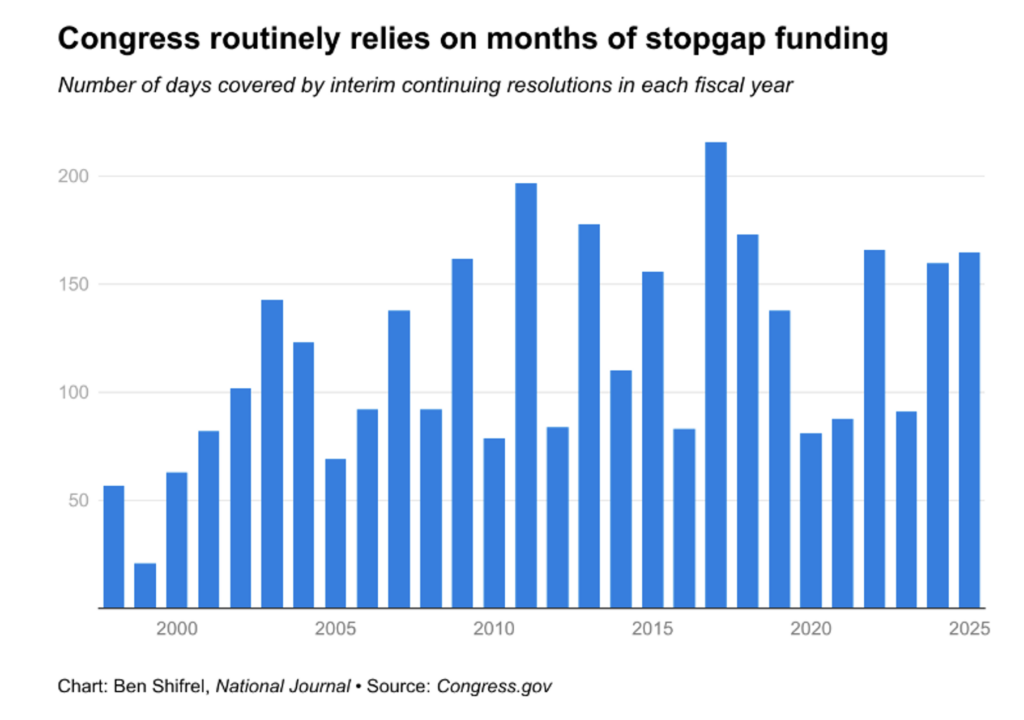
Congress Relies on CRs. This week, the House passed a continuing resolution (CR), pushing the next government-funding deadline more than three months down the road. The reliance on temporary funding is not new. From 1998 through 2025, Congress used CRs for an average of 118 days per fiscal year, with stretches ranging from 21 days to 216 days. This year is unusual, however, for how early the process began—both chambers acted on CRs before September for the first time in the modern budget era.
In Other Words
“The only reason that communities throughout the USA should not want data centers is if they want to end up being backwards and poor. If they want to be successful and rich, with far lower taxes and jobs all over the place, let data reign,” President Trump.
“The biggest oil deal in world history!” President Trump on the reported deal for the U.S. to take control of Venezuela’s oil.
“The world is awash in debt. The only way for us to get out of this is to grow our way out of it,” Treasury Secretary Bessent.
Did You Know
The Supreme Court ruled 5-4 to allow the White House to continue with its $400 million ballroom construction project.
Graph of the Week
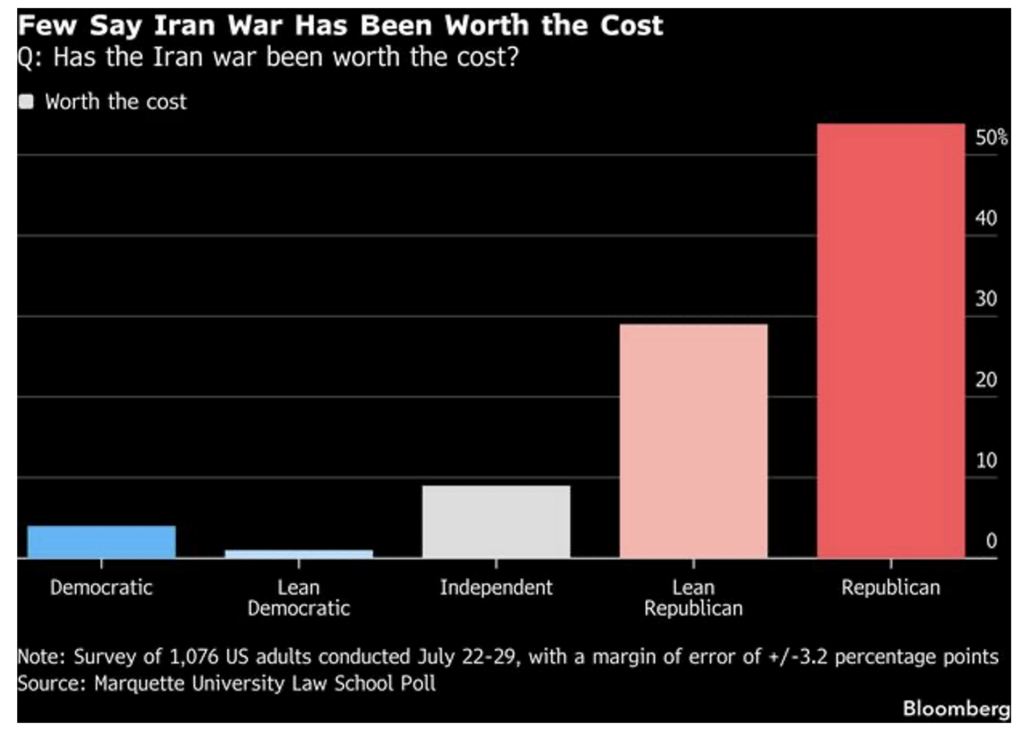
Few Say Iran War Has Been Worth the Cost. The U.S. and Iran exchanged strikes for the first time in a month as American forces hit an island in the Strait of Hormuz and the Iran responded by launching attacks on the UAE and Jordan. The incidents underline the high tensions between Washington and Tehran, with the countries still at odds over the status of the Strait of Hormuz and both unwilling to restart negotiations to end a war now more than six months old. U.S. and Iranian officials say they expect the conflict to drag on for months, with the sides essentially deadlocked. The U.S. attack was the first against Iran since late July, as President Trump has shifted toward an economic pressure campaign aimed at winning concessions from Tehran. Countries with ties to Tehran have so far shrugged off the sanctions threats. Any sustained return to hostilities risks driving up energy costs and stoking inflation, which would unnerve investors and complicate Republicans’ effort to retain control of Congress in November’s midterm elections. Polls show growing frustration among American voters with the war.