Thought of the Week
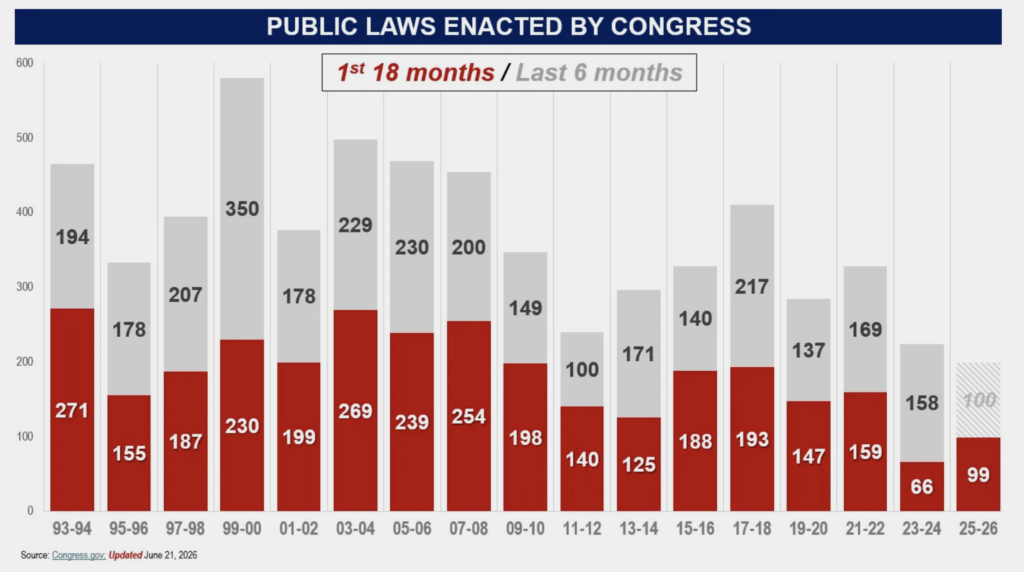
I’m generally an observer in a text group that likes to dig deep into the minutiae of national politics. This past week, on one side of the debate were those who argued that it was paramount to win elections simply to keep the opposing party out of power; the other side took the stance that what good is a November victory if the goal isn’t to effect policy change once in office, even if that jeopardizes future reelection chances. At one point, those arguing in favor of election wins said that due to the use of Executive Orders, the reconciliation process, continuing resolutions, and the Congressional Review Act, policy and politics today are merely impactful in the short-term. Against my better judgment, I chimed in, pointing out that lifetime judicial appointments are, by definition, long-term, and saying that although I understood where they were coming from, if policy change is rooted in legislation, it can have major long-term impacts, and I pointed to the Affordable Care Act as one of several examples. I saw the counter coming from a mile away—Obamacare passed because a filibuster proof majority existed at the time, was modified using reconciliation, and thus, made winning elections of utmost importance. Without realizing it, those arguing for election wins made my case. As a result of Obamacare’s passage Democrats sacrificed their majority, Republicans regained control of the House by picking up a net total of 62 seats, the GOP’s largest gain since 1938, with the GOP also netting 6 Senate seats. President Obama himself famously termed the loss as a “shellacking,” as the party experienced major losses across all levels of government; yet, the legislation has endured. Although the 119th Congress is struggling to legislate, it is still expected to pass another 100+ pieces of legislation on top of the 99 laws it passed during its first 18 months. The point is that even a gridlocked Congress passes enough legislation to create opportunities and generate risks for a wide variety of stakeholders. The action we’re still likeliest to see will revolve around defense, crypto, energy permitting, AI, health care, transportation, and government spending. To track any, or lobby for/against, legislation that will impact your business, reach out to the Washington office as an internal advocate.
Thought Leadership from our Consultants, Think Tanks, and Trade Associations
Bloomberg Government Outlines Democrats’ 2027 Five Priority To-Do List. While Democrats like their odds of retaking the House this November, if they succeed, they’ll have a harder task than winning: finding legislation they can realistically advance under President Trump. Among Democrats’ top political and policy priorities are: (1) Lowering the Cost of Living. Democrats attribute their underperformance in 2024 to a lack of emphasis on economic issues, specifically the high cost of housing, groceries, and other essentials, and they’ve landed on “affordability” as their main buzzword ahead of this year’s midterms. Turning that message into legislation will be difficult if Republicans retain the White House and possibly the Senate. One possibility would be to renew the Affordable Care Act tax credits that expired at the end of 2025. (2) Fighting Corruption. Party leaders are already brainstorming how “to stamp out the culture of corruption” in government—pointing to common Democratic concerns about President Trump’s stock trading, White House crypto involvement, and investigations into political enemies. If Democrats control the House, they’ll have a chance to hold official hearings and subpoena administration officials to press them on perceived corruption. (3) Ensuring Voting Rights. Democrats are opposed to red states’ mid-decade redistricting and a recent Supreme Court decision that threatens Black political representation in the South. Multiple Democrats say they want to pass legislation that secures the right to vote across the country. (4) Blocking Immigration Policy. Few issues have divided Democrats and the Trump administration more deeply than immigration over the past two years. Although Homeland Security and Immigration and Customs Enforcement have been funded through reconciliation, Democrats will still want to focus on the issue. (5) Fixing Congress. Although it’s almost cliche for the incoming majority party, whether Republican or Democratic, to promise to run Congress better, Democrats contend that this time they want to put appropriations committees back on track and not go down the road of continuing resolutions and reconciliation bills.
Eurasia Group Upgrades the U.S.’s Short-Term Political Trajectory. Reflecting expectations for policy stability ahead of the midterm elections, the U.S. short-term political trajectory has been upgraded to neutral (from negative). Because the Iran deal is the biggest motivation for an upgrade, any breakdown would cause reconsideration of the trajectory. Across domestic and economic policy areas, policy is likely to have a net-neutral effect. On trade, peak volatility has passed, and Section 301 investigations will lock in tariff rates. In Congress, the legislative picture is neutral to modestly constructive, and on fiscal, no retrenchment is likely. Concerning AI, the Trump administration is likely to continue its non-regulatory stance. More broadly, the U.S.’s economic resilience over the last year, against a difficult policy environment, with both market performance and corporate earnings remaining strong, suggests the bar to for a negative American political trajectory should be high, and current circumstances do not clear this bar. The longer-term outlook remains negative largely due to the deteriorating U.S. fiscal situation, the lack of will in either party to resolve it, and the longer-term evolution of the GOP into a populist, less pro-corporate party.
NAM Asks/Answers When Shipping Will Bounce Back in the Strait of Hormuz. While the signing of a ceasefire agreement between the U.S. and Iran has resulted in the reopening of the Strait of Hormuz, importers worldwide are wondering when shipping traffic will fully resume. The consensus is that it could take months for traffic in the strait to reach prewar levels. The current situation: crude oil is moving through the strait more freely, but only slightly. In fact, major shipping firms have yet to allow their ships to begin the journey. The forecast: it could take several weeks for traffic to return to 30% to 50% of prewar levels, or roughly 30 to 50 ships a day, with the first ships moving through being those that were confined to the region since February. Another source of concern: no one knows what Iran might eventually require of ships seeking to travel through the strait. The commodities: once ships can transit the strait, producers in the Gulf can reopen oil and gas fields, itself a lengthy process that will be compounded by damage to certain facilities from Iranian attacks. But what does that mean for countries with dwindling reserves? Once traffic picks up, another 52 days will be needed for oil to arrive at far-off buyers in Asia and get refined. This means countries will have to rely on existing inventories in July and August, another several weeks of depletion. With Middle East crude production more than 11 million barrels below prewar levels, recovery could take four to six months. In the U.S.: the U.S. oil market could take months to bounce back even after the strait reopens. Since late March, the U.S. has drawn about 66 million barrels from the Strategic Petroleum Reserve, out of 172 million barrels authorized by the Trump administration. At the current pace, that allotment could run out in early September, leaving the reserve at about 243 million barrels, far below its 2009 peak of more than 700 million barrels.”
Observatory Group Says Trade Risks Spread Globally as the U.S. Rebuilds its Tariff Wall.As summer heats up, so too are the risks of more tariffs and trade disruptions from the U.S. to other developed markets. Going forward, the U.S. trade agenda has two main tracks: (1) finalizing Section 301 investigations related to forced labor and industrial overcapacity (and IP for Vietnam and drug pricing for Germany); and (2) kicking off USMCA renegotiations with Mexico and Canada. As Section 122 tariffs expire, the Section 301 investigations are meant to preserve the U.S. tariff wall and to make it more legally durable. Although the new tariffs are stacked for those countries subject to more than one investigation, the effective tariff rates could be much lower, given the caps that many countries agreed to under framework deals. Still, the new 301s will produce winners and losers vs. the IEEPA-based and Section 122 regimes. For example, China and the Philippines should be big winners. India, Norway, Singapore, and Vietnam could be worse off. In terms of USMCA, expect talks to drag on well into the second half of the year and the base case remains the same, i.e., that annual renewals will occur from now on.
“Inside Baseball”
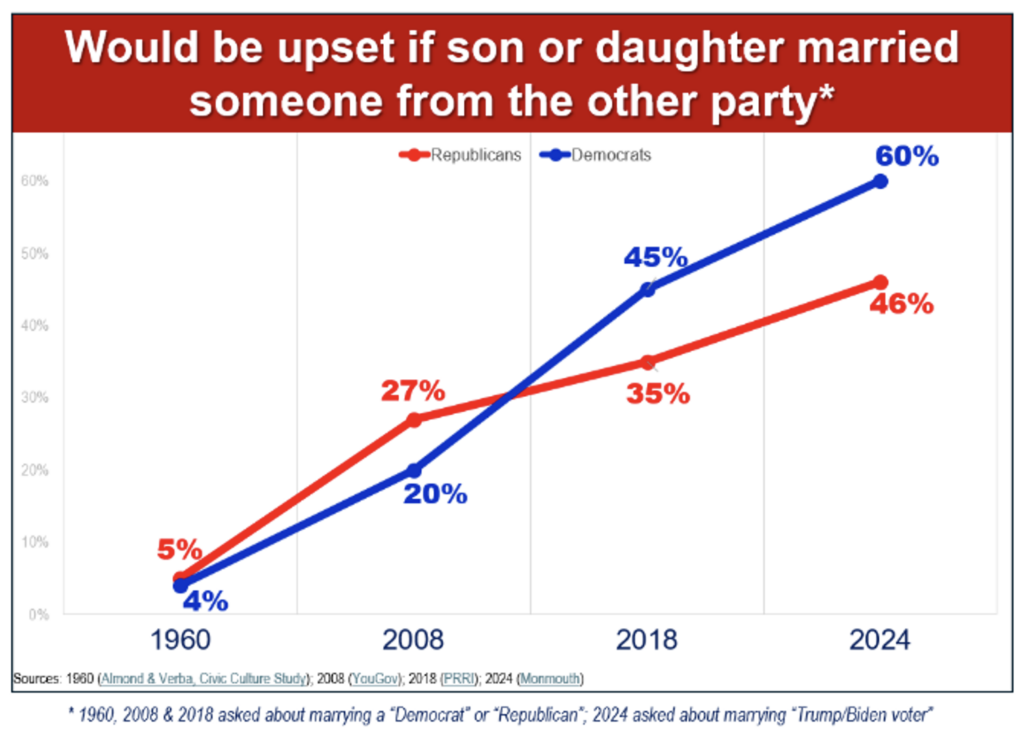
A Quarter Century of Nonstop Crises has led to Panic Disorder Politics. The 21st century has been one thing after another—national security crises (9/11, “forever wars,” global pandemic), economic crises (dot com crash, Great Recession; inflation spikes), and societal crises (COVID closures, school shootings, police violence, open borders). At the same time, Americans have never had more immediate access to “breaking” news, streaming video, misinformation, and purposeful disinformation, making each crisis feel personal and overwhelming. While panic disorder keeps the brain flooded with adrenaline, generating a fight-or-flight impulse that’s unceasing, modern American politics has a tendency to do the same. Fundraising texts are apocalyptic, campaign ads existential, every election is “the most important of our lifetime,” the other party is “downright evil” and a threat to “destroy America.” Politicians and party operatives exploit panic disorder because it works. So while, Manichaean messaging drives voter engagement, it also craters trust in government, leaves voters anxious, and undermines elected officials’ capacity to compromise and govern. How bad has it become? A recent poll found 60% of Democrats and 46% of Republicans would be unhappy if their son or daughter married someone voting for the other party’s candidate.
In Other Words
“Are you his interpreter, or his vice president? Come on,” The View’s Joy Behar to Vice President Vance when discussing President Trump’s statement that he loves inflation.
Did You Know
As the United States approaches the 250th anniversary of the signing of the Declaration of Independence, the American Enterprise Institute (AEI) reports that as of the beginning of this year, just 45% of Americans had read the Declaration of Independence in part, 29% had read it in full, and 26% had not read it at all. Even more interesting is that the youngest signer of the Declaration of Independence was Edward Rutledge of South Carolina, who was just 26 years old. His fellow South Carolinian, Thomas Lynch Jr., was also 26, making them the youngest delegates to sign the historic document. Benjamin Franklin of Pennsylvania was the oldest signer at age 70.
Graphs of the Week
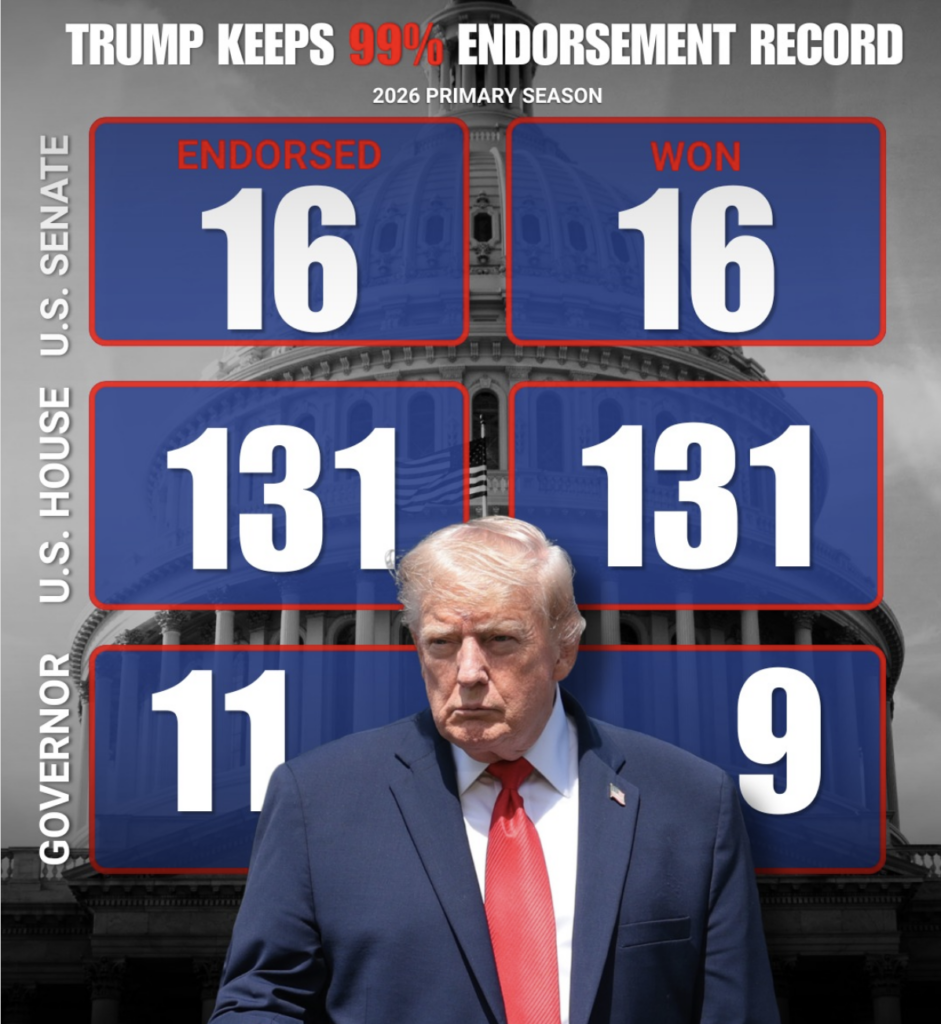
President Trump Still Dominates the GOP. Although Although his overall job approval may be down to 39% and 53% of Republicans disapprove of how he’s handling gas prices, President Trump continues to dictate outcomes in Republican primary elections via endorsements and spending. In fact, he has used this dominance to defeat Republicans who criticize him or fail to do as he demands, thinning the ranks of resisters and further cementing control going forward. So What? Regardless of the midterm election’s outcome, President Trump intends to lead and shape the GOP in his remaining two years—a very un-lame duck who is likely to play an outsized role in the 2028 GOP President primaries.