
 Thought of the Week
There’s no question that President Trump’s tariff campaign has become the hallmark of his second term in office. Even after the Supreme Court struck down the President’s International Emergency Economic Powers Act (IEEPA) tariffs, the White House was prepared to employ a series of alternative trade authorities to repave the tariff road forward. As the Trump administration steamrolls ahead, Congressional Democrats seem to be finding the resolve necessary to, if not construct, at least send the message that they’re ready to construct as series of trade roadblocks to call their own. At least this is the feeling I got after two straight days on Capitol Hill. House Democratic leadership staff told us in no uncertain terms that they’re already beginning to plan their strategy if the midterm elections go their way. In terms of trade, they told us that companies should not view the Trump administration’s country-specific “trade deals” as durable for any longer than the next three years; to expect wild gyrations in USMCA talks between now and July; and to expect heightened efforts to return trade authority to Congress. Although Democrats were able to trigger votes to end the emergency authority allowing levies under IEEPA prior to the Court’s ruling, the atmosphere against the president’s trade policies in the offices I visited was the most intense I’ve experienced since last April’s “Liberation Day.” No fewer than four offices we visited pointed us to House Ways and Means Trade Subcommittee Ranking Member Sanchez’s (D-CA) Stopping a Rogue President on Trade Act, which aims to limit executive power by requiring congressional approval for new tariffs imposed by the president. Another bill in the pipeline aims to protect national security relationships and U.S. manufacturers by requiring congressional approval for any tariffs imposed on NATO allies. And other proposed legislation being discussed would seek to increase congressional review of Section 301 tariffs, revisit the Trade Adjustment Assistance program, and close a variety of trade loopholes. Set against a broader debate regarding the balance of power between Congress and the Executive branch, I only expect the political battle, including with respect to trade, to deepen as the midterm elections draw closer. In fact, this intensity is already playing out on TV in congressional ad campaigns. During the last month, across some of the most hotly contested races, Democratic candidates and Democrat-aligned groups have aired spots blaming tariffs, and Republican inaction, for rising costs. Each office we visited also implored us to help them reach out to their constituents either through fly-ins to Washington or through site visits. If your business department would like to reach out to your congressional or Senate office, the Washington office is more than ready to assist.
Thought Leadership from our Consultants, Think Tanks, and Trade Associations
Eurasia Groups Says Reconciliation Remains Unlikely in 2026. Major fiscal legislation remains unlikely in 2026 (10% odds) due to divisions over policy within the Republican Party, although debate over a potential reconciliation bill will continue through the spring. If a party-line reconciliation bill does take shape, it would likely focus on instituting tax and spending cuts that did not make it over the line in the One Big Beautiful Bill Act (OBBBA), new anti-immigration measures, and increasing defense spending. Fiscal implications would likely be modest, with spending cuts largely offset by moderate tax cuts and higher defense spending; if lawmakers opted for tariff “rebate” checks, as floated by the White House last year, it would significantly blow out the fiscal cost of any bill.
Inside U.S. Trade Reports Congressional Republicans are United in Support of USMCA Renewal. GOP lawmakers, without exception, believe in the importance of the U.S.-Mexico-Canada Agreement (USMCA) and back its renewal even if some are not vocal about their support, according to Sen. Young (R-IN), a member of the Senate Finance Committee. Although President Trump recently dismissed the trilateral agreement, signed during his first term after winning overwhelming support in Congress, as “irrelevant” and suggested the U.S. might pull out of it, possibly replacing it with separate bilateral accords, Sen. Young said his optimism stems from private conversations with colleagues that have not yet evolved into public conversations. USMCA’s first six-year review is set for July, a process likely to lead to negotiated changes if the U.S. remains committed to the agreement. While most Republicans aren’t yet taking public positions on USMCA, they are working with the White House and will back a renewal. The senator also said he expects USMCA conversations to intensify in the lead-up to the midterm elections. While Sen. Young believes the agreement should remain trilateral, U.S. Trade Representative Greer said that while Mexico has been “pragmatic” in its talks with the U.S. ahead of USMCA review, dealings with Canada have been more “challenging.” Earlier this month, the USTR announced that trade officials from the U.S. and Mexico would convene on March 16 for the first round of bilateral discussions in preparation for the formal launch of the USMCA review.
Observatory Group Asks Whether New Fed Chair Warsh Will Cut Rates Regardless of the Data; the Short Answer: “No.” There are many economic scenarios that could produce a rate cut at Kevin Warsh’s first FOMC meeting (expected to be June 16-17) or soon afterwards. Aside from the economic situation, the odds of a cut largely rest on Chair Warsh’s character, temperament, and plans for his entire Chairmanship. Although Warsh has spent a long time in policy purgatory, waiting for a Republican president and the end of the current chair’s term, he will finally be able to chair the Fed in a way which best fulfills the central bank’s dual mandate and importantly, his ambitions. Implementing a rate cut at the outset of his term means nothing to him compared to those other considerations. It is sincerely doubtful that Chair Warsh will advocate for a rate cut, assuming inflation stays the same or rises, let alone pressure a reluctant FOMC to do so. Such an approach will be key to gaining the FOMC’s trust, maintaining the capacity to influence it in future, and making the markets confident of a rational and independent Fed. There will be no pleasing President Trump, at least for any length of time, and Warsh knows it. So, should there be tension between the President’s wishes and Warsh’s policy preference, he will choose the latter.
“Inside Baseball”
Most Washington-Based Energy Consultants Agree—Gulf War III is by Far the Largest Oil Disruption in History and Has Zeroed Out Spare Capacity. Gulf War III has disrupted as much as 20% of global oil supply for two weeks and counting, which is more than double the previous record set during the Suez Crisis of 1956-57, which disrupted just under 10%. The current situation is not a demand shock. It is a simultaneous supply and buffer shock: the conflict has disrupted both production flows and the spare capacity that markets rely upon to offset disruptions. The primary holders of spare capacity, Saudi Arabia and the UAE, have been cut off from global oil markets, effectively eliminating the industry’s traditional shock absorbers. During the Suez Crisis, the last time a disruption approached this scale, spare capacity stood at approximately 35% of global supply and was located largely in the U.S., where it was available to global markets. That cushion no longer exists. Absent a near-term resumption of Strait of Hormuz flows, the global oil market will need to balance via demand destruction caused by sharply rising oil prices.
In Other Words
“I guess. But I think they’re worried about that all the time. We think about it all the time. We plan for it. But yeah, you know, we expect some things. Like I said, some people will die. When you go to war, some people will die,” President Trump on whether Americans should be worried about Iranian retaliatory attacks at home.
“We did a little excursion. A couple weeks, a few weeks of excursion, had to take an excursion, but it’s doing well. The market is holding up well. I figured we would be hit a little bit, but we were hit less than I thought, and we will be back on track in a pretty short while. Prices are coming down substantially, oil will be coming down, ” President Trump on the Iran war
Did You Know
Believing her children’s deaths were divine punishment for her husband’s political pursuits, Jane Pierce, wife of 14th President Franklin Pierce, famously prayed every night for her husband to lose the 1852 presidential election. Described as a “reluctant first lady,” she despised politics, was in poor health, and feared that political ambition would bring additional tragedy to her family. Pierce won the election with the highest share of electoral votes since James Monroe’s uncontested 1820 re-election, and the Pierce’s third son died a year later in a train accident.
Graphs of the Week
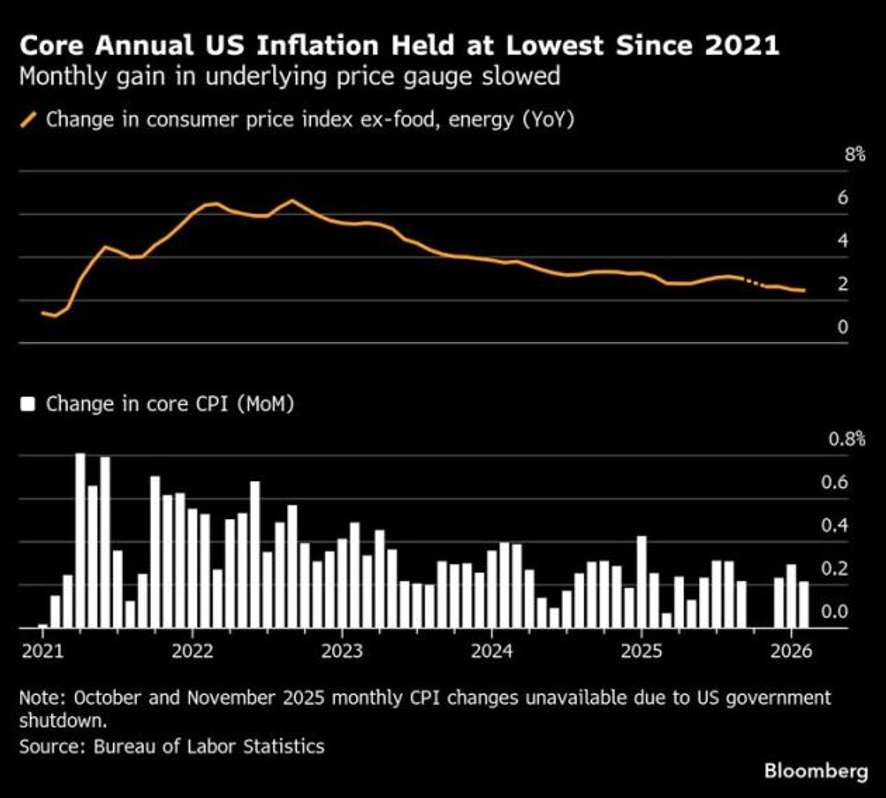
Underlying inflation slowed in February from a month earlier, offering some relief before the war with Iran began. According to the Bureau of Labor Statistics (BLS), the 2.5% growth rate in the consumer price index from the previous year was the slowest inflation pace in nearly five years. Lower prices for used cars and car insurance helped keep inflation in check, despite higher costs for gas and groceries, including fresh vegetables and coffee. Federal Reserve officials are expected to leave interest rates unchanged at their policy meeting next week. With the war threatening to push up inflation—at least in the near term—some analysts now see a chance the central bank will remain on hold for longer.
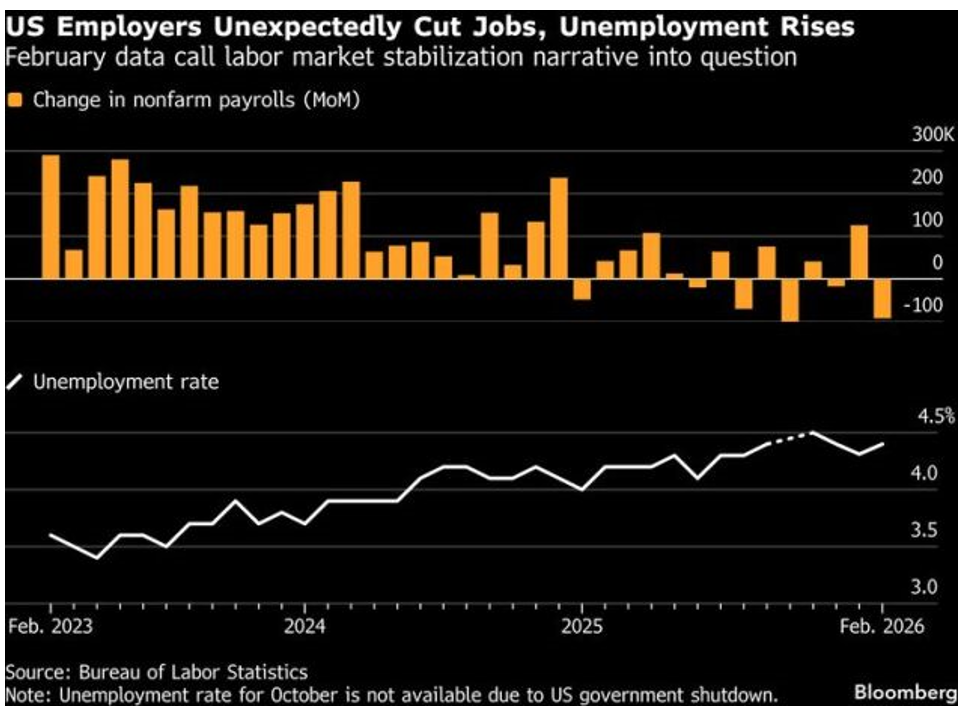
Just when it seemed the labor market was stabilizing, the Bureau of Labor Statistics (BLS) reported that payrolls dropped by 92,000 last month and the unemployment rate grew to 4.4%. The decline in payrolls was one of the largest since the pandemic and reflected decreases in health care employment, leisure, hospitality, and construction. What’s more, manufacturing, transportation and warehousing, and information services also cut jobs. The hiring slump threatens to upend the prevailing view among Fed policymakers that a stabilizing labor market will allow them to keep interest rates steady as they fight persistent inflation. White House National Economic Council Director Hassett said the report was an “outlier,” blaming bad weather and a new BLS process that can produce more volatile.
Metaverse kazan ekosisteminde sanal dünyada arsa al, inşa et ve dijital ekonominin fırsatlarını değerlendir. 7307
Crowdfunding scam case studies revealing how fictional products attract real money–back smarter with these red-flag checklists. 7988
Ucuz escort seçenekleri bütçenizi zorlamadan kaliteli vakit geçirmenizi sağlar; hesaplı paketler ve kısa süreli buluşma imkânları mevcut. 1052
Mehmet Ali Aydınlar porno ifşa araması konusunda toplumda merak uyandıran başlıklar ve güncel bilgiler. 4765